Remote work is no longer a perk. In 2025, it’s a real way of working. If you have the right skills, you can work from anywhere. But many roles expect more from remote workers. These are the skills that let you thrive, even when you’re miles away.
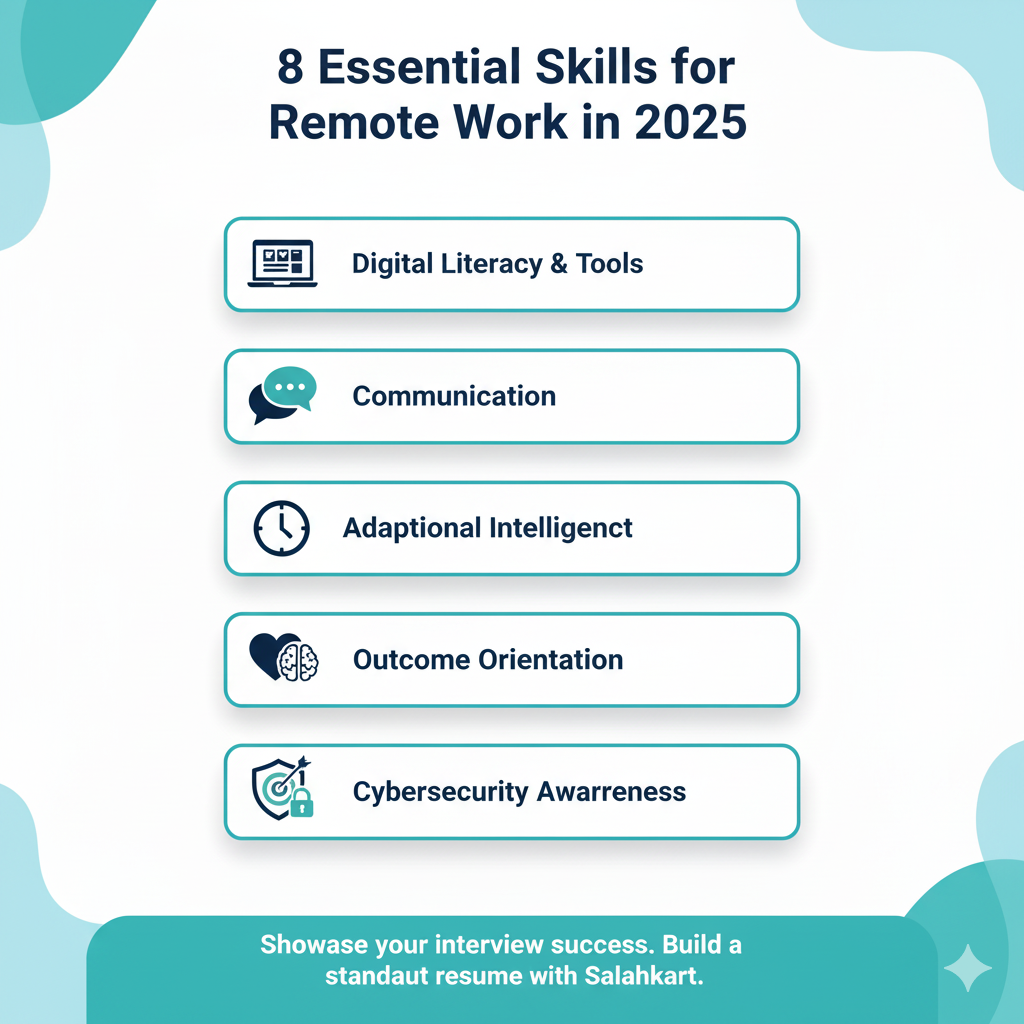
1. Digital Literacy & Tool Proficiency
You must know remote tools well. Apps like Slack, Zoom, Notion, Trello are often part of daily work. Some remote roles need cloud tools (Google Workspace, AWS) and online collaboration suites. If you can pick up new tools quickly, you already gain big advantage.
2. Written & Verbal Communication
Remote work depends on how well you share your ideas without face-to-face cues. Emails, chat messages, video calls—these dominate. Being clear, concise, and polite is essential. Also, listen well in virtual settings. Ask clarifying questions to avoid misunderstandings.
3. Self-Motivation, Discipline & Time Management
No one watches you closely when you work from home. You must manage your schedule and work without constant supervision. Setting routines, blocking focused work time, and meeting deadlines on your own are all key. If you master this, you gain trust from employers.
4. Adaptability & Tech Agility
Tech and processes change fast in remote work. You may need to learn a new tool or change your workflow suddenly. Being adaptable means you don’t resist these changes. You learn quickly. You try out new methods. You stay open to feedback.
5. Emotional Intelligence & Cultural Awareness
Remote teams are often global. Different cultures, time-zones, communication norms. Emotional intelligence helps you read between the lines. Show empathy. Try to understand others’ context. When you work with people from different backgrounds, cultural awareness avoids missteps.
6. Outcome-Orientation & Accountability
Remote employers want results, not just activity. It’s less about hours, more about output. If you can produce measurable results, you stand out. Own your tasks fully. Track your progress. Be transparent when things don’t go as planned. Accountability builds trust.
7. Cybersecurity Awareness & Digital Safety
Your digital set-up is part of your job. Remote work often means using personal networks or devices. Knowing basic cybersecurity practices—strong passwords, safe WiFi, updating software, avoiding phishing—is important. Employers now count security as a remote work skill.
8. Work-Life Balance & Managing Burnout
When your home is your office, lines can blur. Without boundaries, work seeps into personal time. Knowing how to balance work and rest is a skill. Use tools to track hours. Set clear work hours. Take breaks. Avoid overload. This keeps you productive and sane.
Final Thoughts
Remote work gives you freedom. But it also demands responsibility and continuous learning. If you build these skills—digital literacy, communication, self-motivation, adaptability, emotional intelligence, outcome-focus, cybersecurity, and balance—you’ll be ready to work from anywhere in 2025.
Want to show your remote-ready skills on your resume? Use Salahkart to craft a resume that highlights what employers want. Clean format, clear examples, skills that shine. Start building your remote-friendly resume today.
Leave a Reply