Mock interviews are practice rounds that mimic real job interviews. They help you feel more confident. They let you spot weak spots before the real interview. If done right, mock interviews can make a big difference.
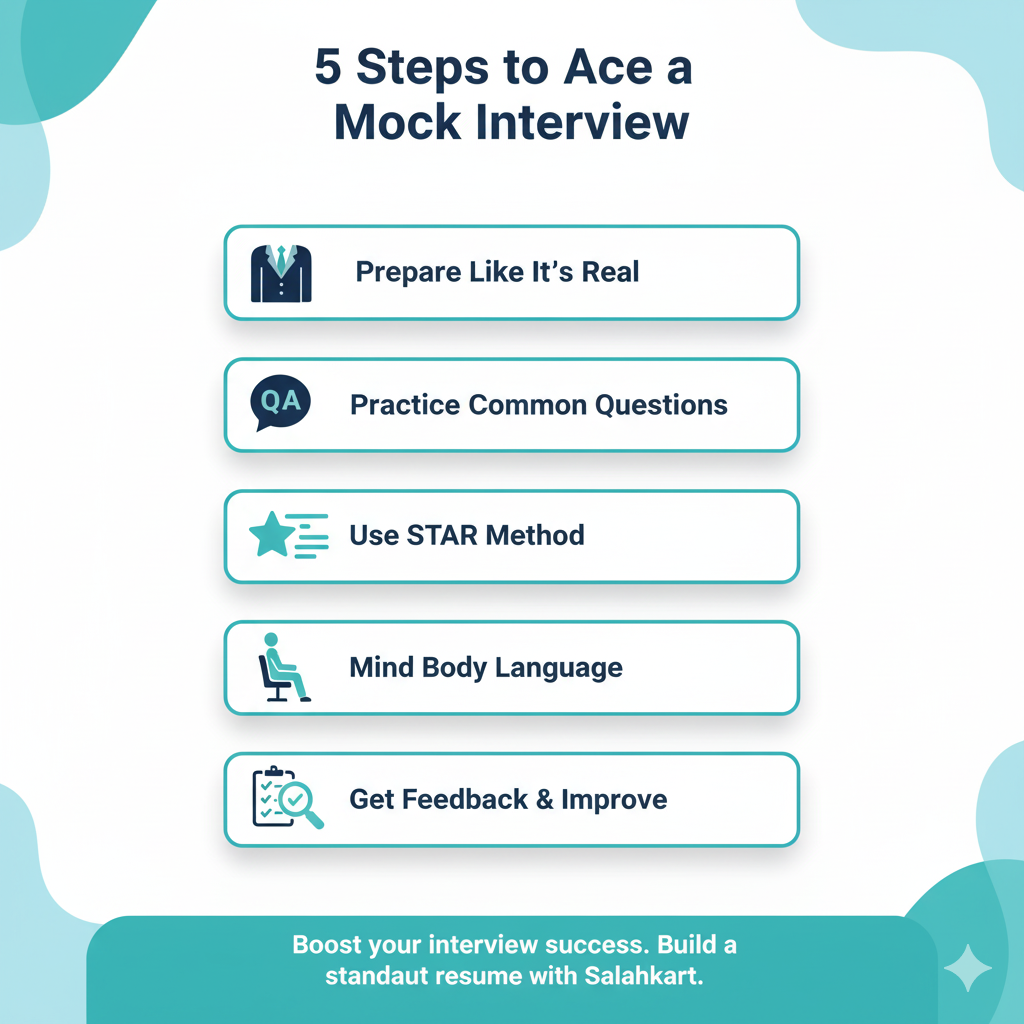
Why Mock Interviews Matter
Mock interviews offer many benefits. First, they reduce anxiety. The more you practice, the less nervous you’ll feel. Second, they improve how you communicate. You get to test answers, tone, body language. Third, they help you understand what interviewers expect. You learn timing, types of questions, and how to respond. Fourth, mock interviews give feedback. Someone can tell you what you did well and where you can improve.
When to Start
You should start mock interviews early—while studying or job hunting. If you have an interview coming, do a mock a few days before. But don’t wait till the last minute. Early practice gives you time to fix mistakes. Even doing them weekly helps improve. Student career centers often offer mock interviews. You can also ask friends or mentors.
How to Prepare Mock Interviews
To get the most out of mock interviews, prepare well. Follow these steps:
- Dress like it’s real. Wear what you would for the real job. Professional attire matters, even in virtual mocks.
- Use a realistic environment. Pick a quiet room. Ensure good lighting and minimal distractions. If the real job’s remote, simulate remote format. If in person, treat the setting seriously.
- Choose the right mock interviewer. Someone who understands your field is best. It can be a mentor, career coach, or an industry peer. They should be able to give honest feedback.
- Bring your materials. Carry your resume, portfolio, or any sample work. Be ready with anything you’ll show in the real interview. It makes the mock feel more authentic.
What to Practice
Here are areas you need to work on during mock interviews:
- Common questions. “Tell me about yourself”, “Your strengths and weaknesses”, “Why this role?”. Practice answers but don’t memorize word by word.
- Behavioral questions using STAR. Situation, Task, Action, Result. This gives structure to your answers. It helps you stay clear and impactful.
- Body language & tone. Eye contact, posture, voice modulation. These matter. Even over video.
- Company research. Learn what the company does, its culture, mission. Add that into your mock interview answers. It shows you’re serious.
- Questions for interviewer. Be ready to ask your own questions. It shows interest and preparation.
How to Get Feedback and Improve
After mock interview:
- Review your answers. Identify where you hesitated or forgot points.
- Record your mock if possible. Listening or watching later helps you notice things you missed live.
- Ask for feedback specifically about clarity, tone, content, body language, and relevance.
- Practice again with these corrections. Don’t repeat the same mistakes.
Using Technology & Tools
You don’t always need a person. Some tools and platforms help with mock interviews:
- Virtual mock interview platforms. They simulate real interviews and give feedback.
- AI tools. You can paste job descriptions and simulate interview Q&A. Some give voice or text feedback.
- Peer-to-peer practice via video calls. Even friends can help if they play the interviewer role seriously.
Final Thoughts
Mock interviews are one of the smartest tricks for job seekers. They don’t cost much. They build confidence, polish your answers, and prepare you for real interviews. The real interview will feel less scary. You’ll perform better. And when you’re ready, you’ll walk in confident.
Want to practice smart and show your best self in real interviews? Use Salahkart to build a resume that pairs well with mock interview prep. Highlight your strengths. Get ready. Nail the real deal.
Leave a Reply