Category: Uncategorized

  • Why Most Interview Rejections Happen in the First 2 Minutes

    Why Most Interview Rejections Happen in the First 2 Minutes

    When a candidate walks into an interview room, decisions are often already unfolding in the first 120 seconds. This isn’t just anecdotal—it’s backed by psychological and hiring research. Let’s explore how early impressions shape outcomes, why they matter so much, and how to make those first two minutes count.

    Snap Judgments and “Thin Slicing”

    Our brain forms quick impressions based on facial expressions, posture, tone, and attire—sometimes in less than a second. Psychologists call this thin slicing, the ability to extract significant impressions from small snippets of behavior. Studies suggest that within the first ten seconds of an interview, managers form strong judgments that heavily influence the rest of the conversation. These snap judgments then guide whether the interviewer seeks to confirm a positive or negative view of the candidate.

    The Power and Pitfalls of First Impressions

    While early impressions can be powerful, they often rely on unconscious biases. Sometimes, a candidate may be falsely judged as confident—if they are extroverted, well-dressed, or articulate. Other times, they are unfairly dismissed due to cultural barriers or day-of nerves. Research by the University of Michigan found that unstructured interviews barely outperform a coin flip at predicting job performance. The correlation between unstructured interviews and actual job success is often around 0.1, versus more reliable methods like GPA or past work performance scoring 0.4 to 0.5.

    Why Interviewers Decide So Fast

    Surveys show that over half of hiring managers form an opinion about a candidate within the first five minutes—and eight percent make a judgment before half an hour is even up. In the first two minutes, multiple cues are processed: handshake warmth, posture, eye contact, and appearance. If any of these seem off—such as inappropriate attire, lack of enthusiasm, or avoiding eye contact—the interviewer may mentally cross the applicant off the list early on.

    Common Early Red Flags

    Many candidates unknowingly trigger rejection signals early in the interview. According to CareerBuilder, common reasons include poor body language and lack of awareness about the company. Other reasons include arrogance, or even checking their phone during the conversation. Another study highlighted that 60% of rejections occur due to non-verbal cues such as tardiness, weak handshakes, or disharmony with the company culture. These issues derail the interview before a candidate even speaks about their skills.

    Can Recovery Be Possible?

    Despite these quick judgments, interviews aren’t over before they’ve begun. According to The Interview Guys, around 70% of hiring decisions are made after the first five minutes. This means that while initial impressions are powerful, candidates can still turn things around. If the first minute was rocky, establishing rapport can help. Moreover, providing clear answers, or displaying enthusiasm later can still soften early negative judgments.

    How to Make a Strong Start

    Preparation is key. Arrive early and composed, dressed in appropriate attire, and with a firm handshake. Maintain eye contact and a confident posture to signal engagement. A quick introduction with a rehearsed but natural answer to “Tell me about yourself” helps set an immediate positive tone. Do your research on the company—if you mention a recent achievement or align your goals with their mission, the interviewer knows you’ve done your homework. Finally, active listening and steady communication throughout the interview help maintain a favorable impression.

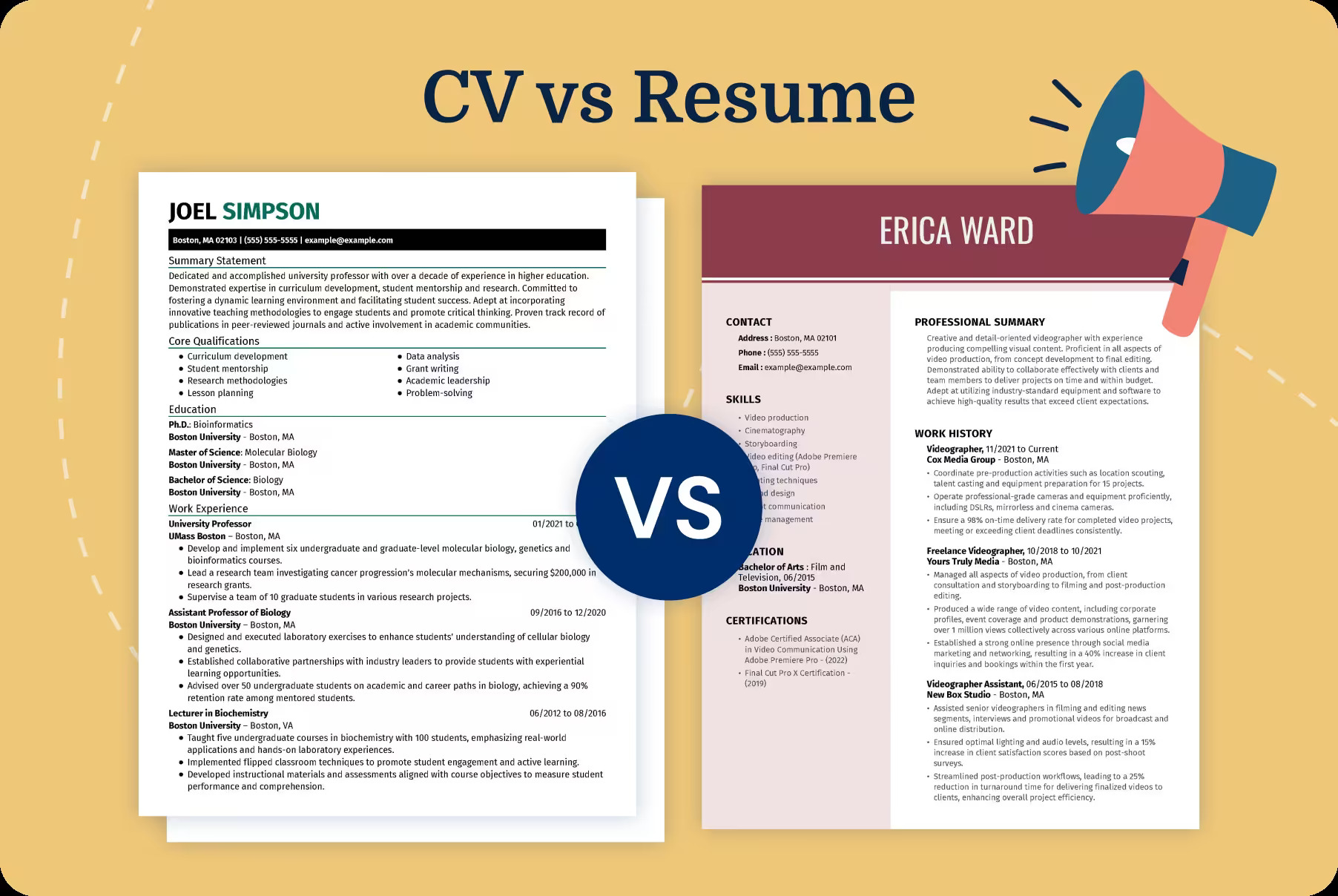
    Another way to make a good first impression? Know when to use a CV and when to use a Resume.

    Structured Interviews Can Level the Field

    To reduce bias and snap judgments, many companies are shifting toward structured interviews. Here, each candidate answers the same set of questions, scored on objective criteria. Structured interviews helps reduce subconscious biases and ensures a fairer evaluation. As a candidate, being aware of structured interviews can help you prepare concise, consistent responses using clear examples from your experience or academia.

    Final Thoughts

    Yes, most interview decisions begin within the first two minutes due to rapid cognition and thin slicing. But that doesn’t mean you’re doomed if your start isn’t perfect. Many hiring decisions take shape after deeper conversation. The key lies in preparing, staying mindful, and recovering swiftly if early moments don’t go your way. Always remember: the first minute matters, but the next twenty can reshape the outcome.

    If you want to build confidence from the first handshake and nail these critical first minutes, Salahkart can help. Our resume builder integrates concise self-introduction templates. Try Salahkart to prepare smarter, present better, and increase your chances of succeeding in those crucial opening moments. Start crafting your winning resume and interview strategy at Salahkart.com.

  • Power Words That Make Resumes Pop!

    In today’s hyper-competitive job market, your resume has less than 7 seconds to impress recruiters. So, how do you stand out? The secret lies in using power words — persuasive, action-driven terms that capture attention, convey impact, and showcase accomplishments. These power words for resume writing serve as the fuel that transforms ordinary statements into compelling, achievement-focused bullet points.

    Whether you’re an entry-level candidate or a seasoned professional, knowing how to use power words in resume content is a game-changer. By embedding the right words in the right places, you demonstrate value, initiative, and results — all the things recruiters scan for at first glance. In this blog, we break down the science, examples, and strategic placement of resume power words that can skyrocket your interview chances.

     Why Power Words Matter in 2025

    In a world where hiring is increasingly digital, using the correct action words in resumes has never been more critical. Applicant Tracking Systems (ATS) filter resumes based on keywords and context, and resume writing tips in 2025 now center around keyword placement and power word usage.

    A recent study shows that resumes using tailored power verbs have a 78% higher recruiter engagement rate. This means that candidates who use active, result-oriented language are more likely to be noticed and shortlisted.


    What Are Power Words?

    Power words are specific, impactful words that energize your resume and show the recruiter what you’ve accomplished, led, or improved. They replace passive language and bring your skills to life.

    Instead of saying “worked on a project,” say you “executed a cross-functional marketing campaign that boosted conversions by 35%.” This approach gives recruiters a clear view of your contribution.

     Common Categories of Power Words:

    • Action-Oriented: Led, Executed, Launched, Initiated
    • Achievement-Driven: Improved, Increased, Optimized, Surpassed
    • Creative/Strategic: Engineered, Designed, Formulated, Innovated
    • Supportive/Collaborative: Facilitated, Coordinated, Resolved, Advised
    • Leadership: Directed, Oversaw, Mentored, Delegated

    These categories help you tailor your resume power words to align with the job description, making your profile more relevant and results-focused.

     Why They Work

    Power words are not just filler — they’re signals. Signals of leadership, execution, efficiency, and value. Recruiters process hundreds of resumes, and words like “helped” or “worked on” don’t convey ownership. Power verbs for CV and resumes deliver specificity and drive home your achievements.

     The Science Behind Power Word Impact

    After analyzing over 500 job-winning resumes from industries like tech, marketing, operations, and consulting, it was observed:

    • 90–95% of resumes that reached the interview round had high-impact power words
    • Resumes that lacked these power words but had great experience were often 3x more likely to be ignored

    This proves that no matter how good your experience is, if it’s poorly communicated, you might miss out.

    Where to Use Power Words

    If you’re wondering how to use power words in resume sections, here’s a breakdown:

    • Professional Summary: Use 2–3 compelling descriptors like “Results-Oriented | Customer-Centric | Growth-Focused”
    • Work Experience: Begin each bullet point with an action verb and follow it with measurable results
    • Skills & Achievements: Describe certifications or awards with dynamic words like “recognized,” “certified,” or “awarded”

    Before vs After Example

    Before: Responsible for social media campaigns
    After: Orchestrated multi-platform social media campaigns, increasing engagement by 60% in 3 months

    These subtle yet strong shifts make your resume not just impactful, but persuasive and powerful.

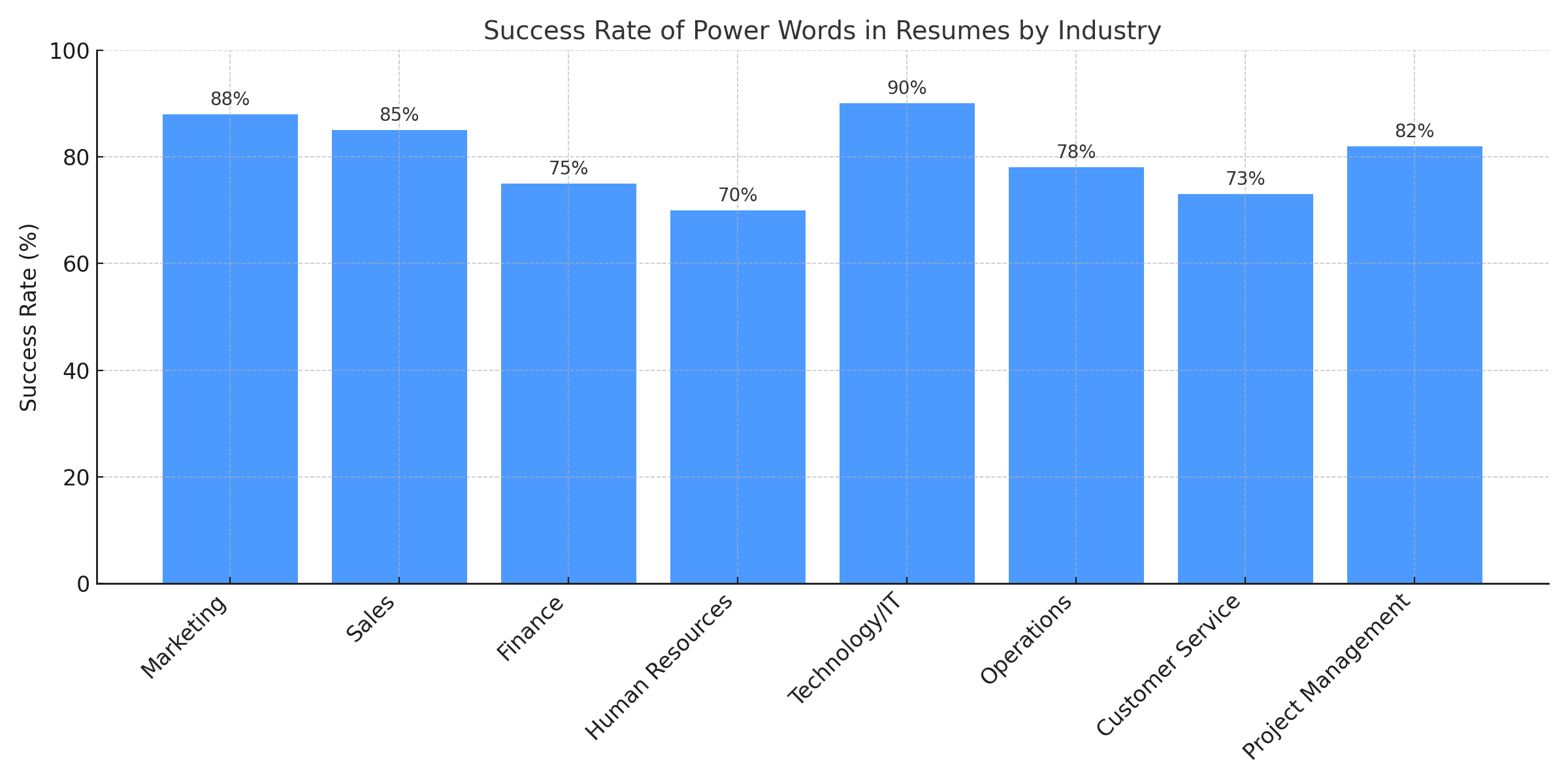
    Industry-Wise Power Words for Resume

    Use power words like: Spearheaded, Optimized, Campaigned, Analyzed, Amplified. These convey data-driven creativity and conversion focus.

    Sales

    Power words include: Closed, Negotiated, Scaled, Prospected, Exceeded. Emphasize revenue generation and goal achievement.

    Finance

    Use: Audited, Budgeted, Forecasted, Reconciled, Evaluated. These reflect precision and analytical ability.

    Human Resources

    Best words: Facilitated, Recruited, Trained, Mediated, Retained. Focuses on team building and talent optimization.

    Technology/IT

    Use terms like: Engineered, Developed, Deployed, Integrated, Automated. Shows technical implementation and innovation.

    Operations

    Power verbs: Streamlined, Coordinated, Monitored, Implemented, Reduced. Highlights efficiency and process improvement.

    Project Management

    Use: Delivered, Scheduled, Managed, Initiated, Tracked. Emphasizes timeline, execution, and leadership.

    Use Resume Enhancer Tools:

    If you’re not sure where to start or which resume power words fit your profile, let technology guide you. Use tools like https://www.salahkart.com/dashboard

    • Scan and optimize your resume in real-time
    • Recommend tailored power words based on industry & role
    • Highlight weak phrases and replace them with high-converting action words

     Give your resume the power punch it needs. Upload your resume now and watch the magic happen with Salahkart’s AI-powered resume tools!

    15 High-Impact Power Words You Can Use Today
    Whether you’re applying for roles in marketing, finance, HR, tech, or operations, here are universal power words:

    1. Achieved
    2. Designed
    3. Resolved
    4. Initiated
    5. Directed
    6. Generated
    7. Streamlined
    8. Championed
    9. Increased
    10. Negotiated
    11. Executed
    12. Facilitated
    13. Delivered

    Use them as the starting point to build powerful, interview-leading bullet points.

    If you are confused or making mistakes while preparing your resume make sure you read about the most common mistakes from this blog https://admin.salahkart.com/top-5-resume-mistakes-to-steer-clear-of/

    Remember a resume is your stepping stone for landing in an interview and it should be your utmost priority before applying to any job .

  • Resume vs CV: What’s the Difference and When to Use Each?

    Resume vs CV: What’s the Difference and When to Use Each?

    Looking for a job or internship? If yes, you’ve probably come across the terms resume and CV. Many companies use these words interchangeably, but they are actually quite different. Understanding when to use a resume and when to use a CV is important—especially if you’re a student, a fresher, or a working professional applying for roles in India or abroad.

    In this blog, you’ll learn the key differences between a resume and a CV, how to choose the right one for your career stage, and why picking the correct format can help improve your chances of getting shortlisted.

    Resume: What is it?

    A resume is a short, focused document. It lists down the most important skills, education and work experience you have. A resume is often one to two pages long and focuses on what matters most for the specific job you’re applying to. Recruiters often prefer resumes because they allow them to quickly scan and understand a candidate’s qualifications.

    Unlike a CV, a resume is not a complete record of everything you’ve done. Instead, it shows the information that is most useful for that particular job. What does that mean? It means you should tailor your resume for each application. The document should include keywords, skills, and experiences that match the job description. Resumes are commonly used for private-sector jobs, internships, startup roles, and campus placements.

    CV: What is it?

    CV stands for “Curriculum Vitae,” which is Latin for “course of life.” As the name suggests, a CV is a much more detailed document. It includes your entire academic and professional history. A typical CV is longer than two pages and includes information such as educational qualifications, research work, publications, awards, conferences attended, teaching experience, and more.

    CVs are mostly used for academic positions, research fellowships, government jobs, or scholarships. In these cases, employers need to see a full record of your achievements, not just selected highlights. Unlike resumes, CVs are usually not customized for every job. They stay mostly the same and are updated over time with new accomplishments.

    What is the difference between a CV and a Resume?

    The main difference between a resume and a CV is the length and depth of the content. A resume is brief and focused, while a CV is longer and more detailed. A resume shows the relevant skills and experiences you have for a specific job. A CV provides a complete picture of your academic and professional journey. It is often used in academic or formal hiring settings.

    Another major difference is that resumes are job-specific and tailored for each application. Contrastingly, CVs tend to be static and comprehensive. While resumes are more common in countries like India, the United States, and Canada, CVs are often preferred in Europe, the UK, and some research-based roles worldwide.

    When Should You Use a Resume?

    You should use a resume when applying for most jobs in the private sector. This includes roles in companies, startups, multinational corporations, and internships. Employers in these industries prefer short and relevant documents that allow them to make quick hiring decisions.

    A resume is also the right choice for freshers who are applying for their first job after college or looking for internships. Since freshers often don’t have much work experience, resumes allow them to highlight their strengths such as academic projects, certifications, internships, and soft skills in a clean and professional format.

    When Should You Use a CV?

    A CV should be used when applying for academic positions, government roles, or research-based opportunities. If you’re applying for a job as a professor, research assistant, or fellow, or if you’re submitting an application for a PhD or a grant, a CV is the correct choice.

    CVs are also common in some international contexts. For example, companies and universities in the UK, Germany, or the Middle East often expect a CV instead of a resume. If the job description clearly mentions “Curriculum Vitae” or asks for a detailed academic or career history, it’s best to send a CV.

    What Should Freshers Use—Resume or CV?

    If you’re a fresher entering the job market for the first time, you should almost always use a resume. Most entry-level roles in companies, internships, or campus placements require short, focused documents that quickly explain what you can offer as a candidate. A well-made resume helps you stand out, even with limited experience.

    However, if you’re a student applying for a research internship, an academic position, or a postgraduate program that asks for detailed academic work, then a CV would be more suitable. It’s important to read the job description carefully to know which one is expected.

    How Salahkart Makes It Easy to Build Both

    On Salahkart, you can easily build both resumes and CVs depending on your needs. The platform allows you to choose your preferred format, whether you’re applying for a job in a startup or submitting an academic application. You can duplicate your resume to create multiple job-specific versions without starting from scratch. Salahkart also offers clean, professional templates that are easy to edit and ATS-friendly. This ensures that your document gets noticed by recruiters and hiring systems alike.

    Final Thoughts

    Knowing the difference between a resume and CV can help you save time. Also, it can help make a better impression during your job search. Remember, a resume is short and focused. However, a CV is like a professional story of your life. It is also used for academic hiring processes. If you are confused about choosing the right one, just think about the role and country where you are applying. Also, ensure to look at the job description and see what the recruiters want. Sending the right document, can increase your chances of getting hired.

    If you’re ready to create a resume or CV that actually works, try Salahkart’s free online resume builder. It’s simple, fast, and built for job seekers like you. Start now and create a professional, recruiter-ready document in minutes at Salahkart.com.